B1 · 3 dk okuma · 288 kelime ·
Nasreddin Hodja and His Funny Stories
Nasreddin Hoca ve Komik Hikâyeleri
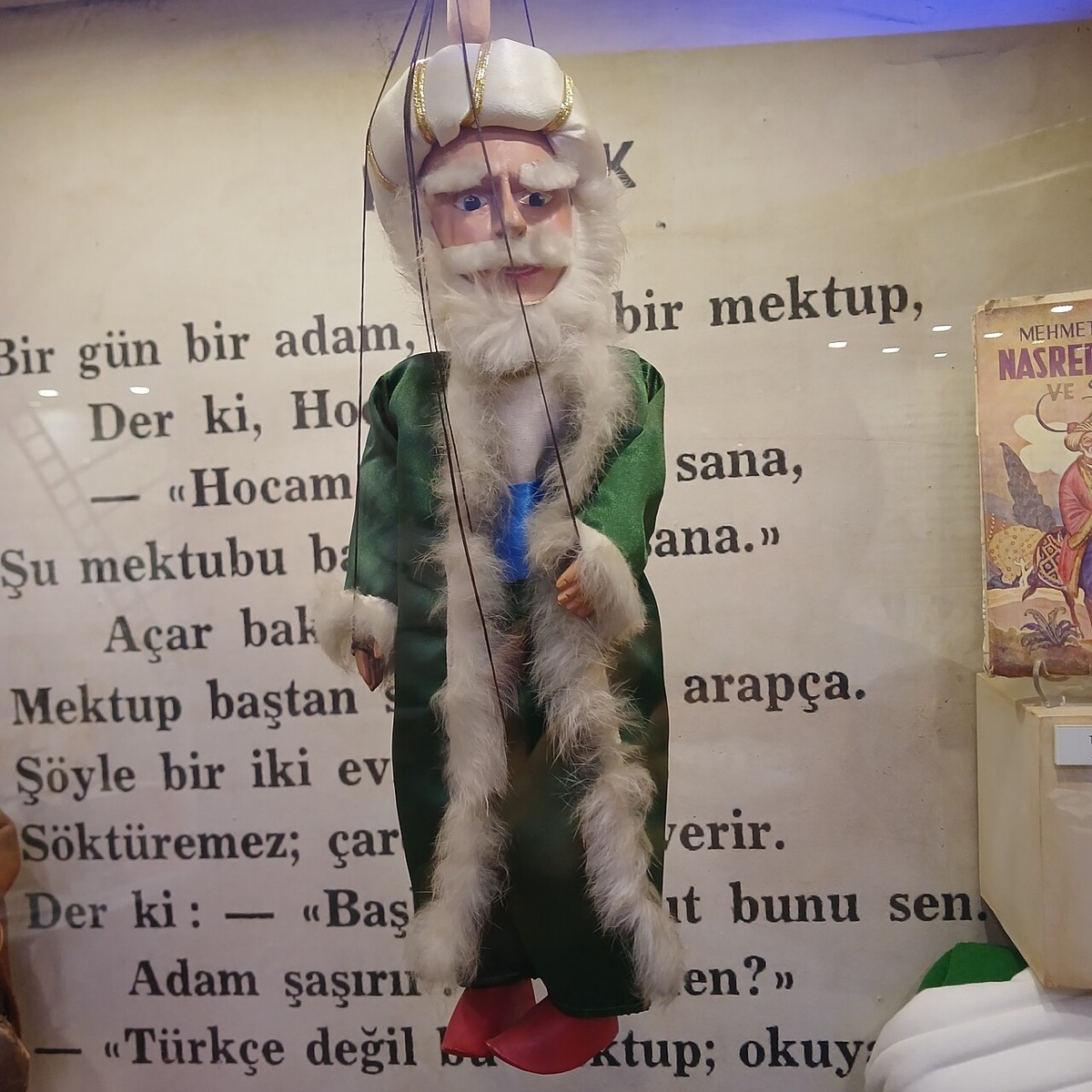
Görsel: Basak (CC0), wikimedia commons
önce İngilizcesini oku
Almost every child in Turkey knows Nasreddin Hodja, a wise and funny man who rides his donkey through hundreds of short stories.
His stories make people laugh, but they usually hide a clever lesson about life.
They are told not only in Turkey but also from the Balkans to Central Asia, and they have been translated into many languages.
Most historians believe that Nasreddin Hodja really lived in Anatolia in the thirteenth century.
He spent much of his life in Aksehir, a town in the province of Konya, where a large festival is held in his honor every summer.
Over the centuries, people added new stories to the old ones, so it is impossible to know which of them really happened.
One of his most famous stories is about a fancy dinner.
One day, the Hodja was invited to a rich man's house, but he went in his old, simple clothes.
Nobody paid any attention to him, and no one offered him any food.
So he went home, put on his best fur coat and came back.
This time, everyone greeted him warmly and gave him the best seat at the table.
When the soup arrived, the Hodja dipped the sleeve of his coat into it and said, "Eat, my coat, eat!"
The surprised guests asked him what he was doing, and he explained that since the coat was the one they had respected, it should also eat the food.
The story is short, but its message is clear: we should judge people by who they are, not by what they wear.
In 1996, UNESCO celebrated an international year in his honor, and today his statue on a donkey, often sitting backward, can be seen in many Turkish towns.
Arkadaşınla paylaş
Bu yazıdaki gramer
Metinde gördüğün yapıları ücretsiz derslerle öğren.
Ücretsiz test
İngilizce seviyeni 5 dakikada öğren
Ücretsiz gramer testi: hangi derslerden başlaman gerektiğini söyler.
Testi çöz