B2 · 5 dk okuma · 588 kelime ·
Ada Lovelace, the First Programmer
İlk Programcı Ada Lovelace
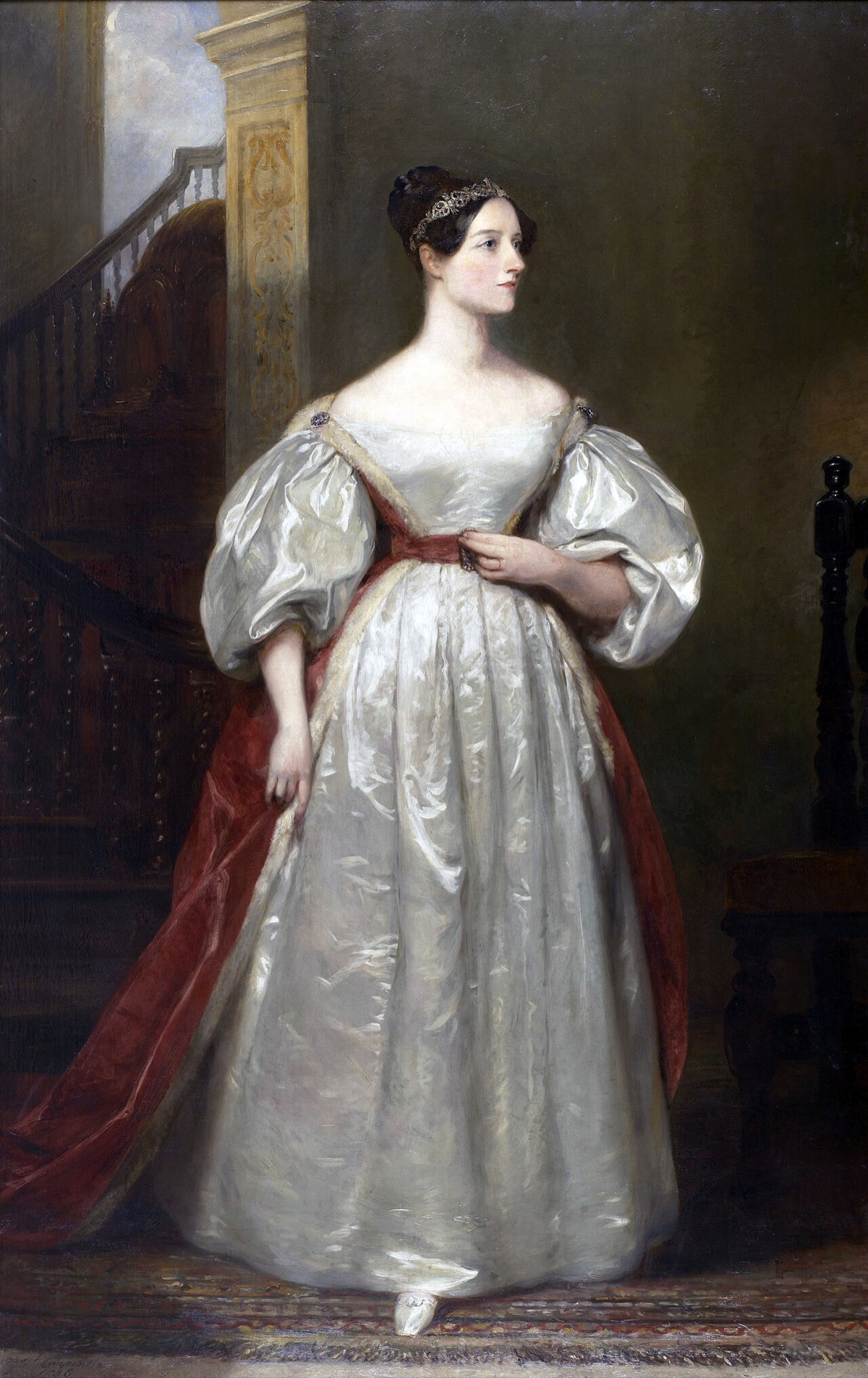
Görsel: Margaret Sarah Carpenter (Public Domain), wikimedia commons
önce İngilizcesini oku
More than a hundred years before the first electronic computer was built, a young Englishwoman wrote what many people consider to be the first computer program.
Her name was Ada Lovelace, and her ideas about what machines could do were so far ahead of her time that they were only fully understood in the twentieth century.
Ada was born in London in 1815.
Her father was Lord Byron, one of the most famous poets in Europe, but her parents separated when she was a baby, and she never really knew him.
Her mother, who loved mathematics, made sure that Ada studied mathematics and science from an early age, which was unusual for girls at that time.
As a child, Ada was curious and imaginative, and at the age of twelve she even tried to design a flying machine after carefully studying how birds fly.
She was often ill as a child and once had to stay in bed for many months, but she continued to study during that time.
When she was seventeen, Ada met Charles Babbage, a mathematician and inventor who had designed a huge mechanical calculator.
She was fascinated by his machines, and the two of them became friends and wrote to each other for many years.
Babbage admired her mind so much that he called her "the Enchantress of Numbers."
He later planned an even more ambitious machine, which he called the Analytical Engine.
It was designed to follow instructions written on punched cards, an idea he borrowed from looms that wove patterns into cloth.
In many ways, it had the same basic parts as a modern computer, including a memory and a unit that carried out calculations.
In 1843, Ada translated an article about the Analytical Engine that an Italian engineer had written in French.
She added her own notes to the translation, and in the end her notes were about three times longer than the original article.
She signed her notes only with her initials, because at that time it was unusual for a woman to publish scientific work.
In one of them, she described step by step how the machine could calculate a complicated series of numbers.
This detailed set of instructions is often described as the first computer program ever published.
Even more impressive was her vision of the future.
Babbage mainly saw his machine as a powerful calculator, but Ada realized that it could work with any kind of symbol, not only with numbers.
She suggested that, if musical notes were represented by symbols, such a machine might one day compose music.
Today, computers are used to write music, create images and translate languages, just as she imagined.
She also warned that the machine could not have ideas of its own and could only do what people told it to do, a question that computer scientists still discuss today.
Sadly, the Analytical Engine was never built, because it was too expensive and too complicated for the technology of the time.
Ada died in 1852, when she was only thirty six years old, and for many years her work was almost forgotten.
When the first modern computers appeared in the 1940s, scientists rediscovered her notes and were amazed by how much she had understood.
In 1980, a programming language was named Ada in her honor.
In 1991, engineers at the Science Museum in London built one of Babbage's calculating machines from his original drawings, and it worked perfectly.
Today, Ada Lovelace Day is celebrated every October to encourage girls and women to study science and technology.
Arkadaşınla paylaş
Bu yazıdaki gramer
Metinde gördüğün yapıları ücretsiz derslerle öğren.
Ücretsiz test
İngilizce seviyeni 5 dakikada öğren
Ücretsiz gramer testi: hangi derslerden başlaman gerektiğini söyler.
Testi çöz