B2 · 4 dk okuma · 555 kelime ·
Evliya Celebi, the Great Ottoman Traveler
Büyük Osmanlı Gezgini Evliya Çelebi
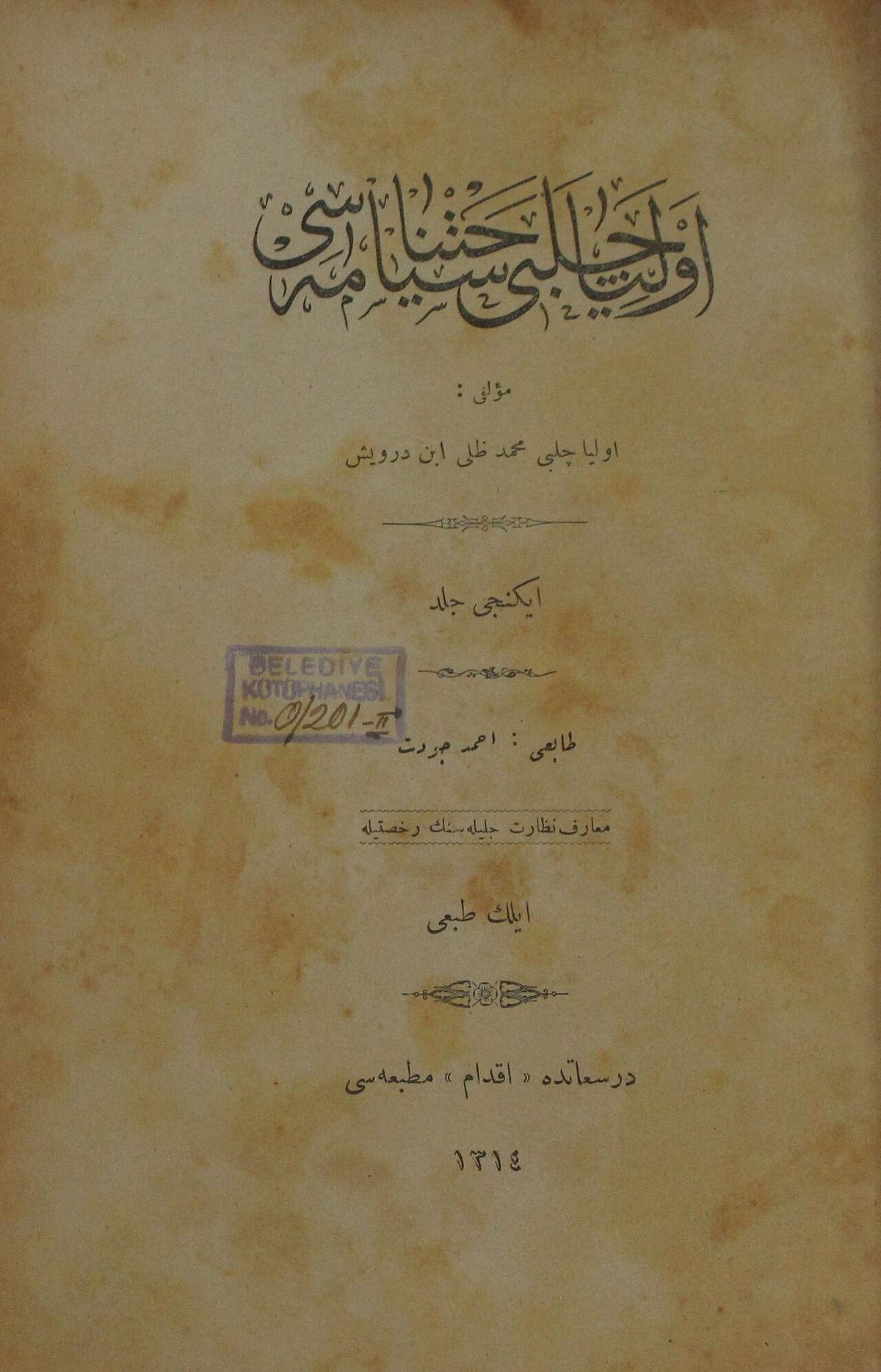
Görsel: İkdam Matbaası, 1896 (Public Domain), wikimedia commons
önce İngilizcesini oku
In the seventeenth century, a curious man from Istanbul spent more than forty years on the road, traveling across the Ottoman Empire and far beyond it.
Wherever he went, he wrote down everything he saw: cities, castles, markets, food, music, languages and the daily lives of ordinary people.
His name was Evliya Celebi, and his ten-volume Book of Travels is one of the longest and most colorful travel books ever written.
His book is so detailed that historians still use it today to learn how people lived in the seventeenth century.
Evliya was born in Istanbul in 1611.
His father was the chief goldsmith of the palace, so he grew up close to the court and received an excellent education.
He studied music, calligraphy and languages, and he was famous for his beautiful voice and his talent for telling stories.
Thanks to his family and his talents, he had friends among powerful officials, and they later helped him to make his long journeys.
From a young age, however, his greatest passion was travel.
He began by exploring every neighborhood of Istanbul, and he wrote a long and detailed description of the city that fills the entire first volume of his book.
He described its markets and craftsmen in detail, and even a great parade of the city's guilds that took days to pass through the streets.
Then he set off on much longer journeys.
Over the following decades, he visited almost every corner of Anatolia, as well as the Caucasus, the Balkans, the islands of the Aegean, Crete, Egypt and Sudan.
In 1665, he even traveled to Vienna with an Ottoman delegation, and he described the city with great curiosity.
In Egypt, where he spent many years, he described the pyramids, the Nile and the crowded streets of Cairo.
He usually traveled with officials or as a guest of local rulers, which allowed him to see places that ordinary travelers could never visit.
What makes his book so special is its rich detail and its lively style.
Evliya would count the shops in a market, list the dishes served in a town, describe the clothes people wore and note how they greeted each other.
He also recorded words and phrases from dozens of languages, which makes his work valuable for language historians today.
In the same way, his notes on music and musical instruments are a treasure for music historians.
He loved a good story, and some of his descriptions are clearly exaggerated, but this only makes the book more entertaining to read.
For a long time, the Book of Travels was known only to a small number of scholars.
Today, it has been published in modern Turkish and translated, at least in part, into many other languages.
The oldest copies of the book are kept in libraries in Istanbul, including the library of Topkapi Palace.
Evliya probably spent his last years in Cairo, where he died around 1682, while he was still working on his book.
In 2011, on the four hundredth anniversary of his birth, UNESCO added the anniversary to its list of important world anniversaries.
In Turkey, many schools and streets carry his name, and his book is often quoted on television and in newspapers.
Four centuries later, Evliya Celebi still invites readers to travel with him, through a world that has changed almost completely.
Arkadaşınla paylaş
Bu yazıdaki gramer
Metinde gördüğün yapıları ücretsiz derslerle öğren.
Ücretsiz test
İngilizce seviyeni 5 dakikada öğren
Ücretsiz gramer testi: hangi derslerden başlaman gerektiğini söyler.
Testi çöz