B1 · 3 dk okuma · 289 kelime ·
Ebru, the Art of Painting on Water
Suyun Üzerine Resim Yapma Sanatı: Ebru
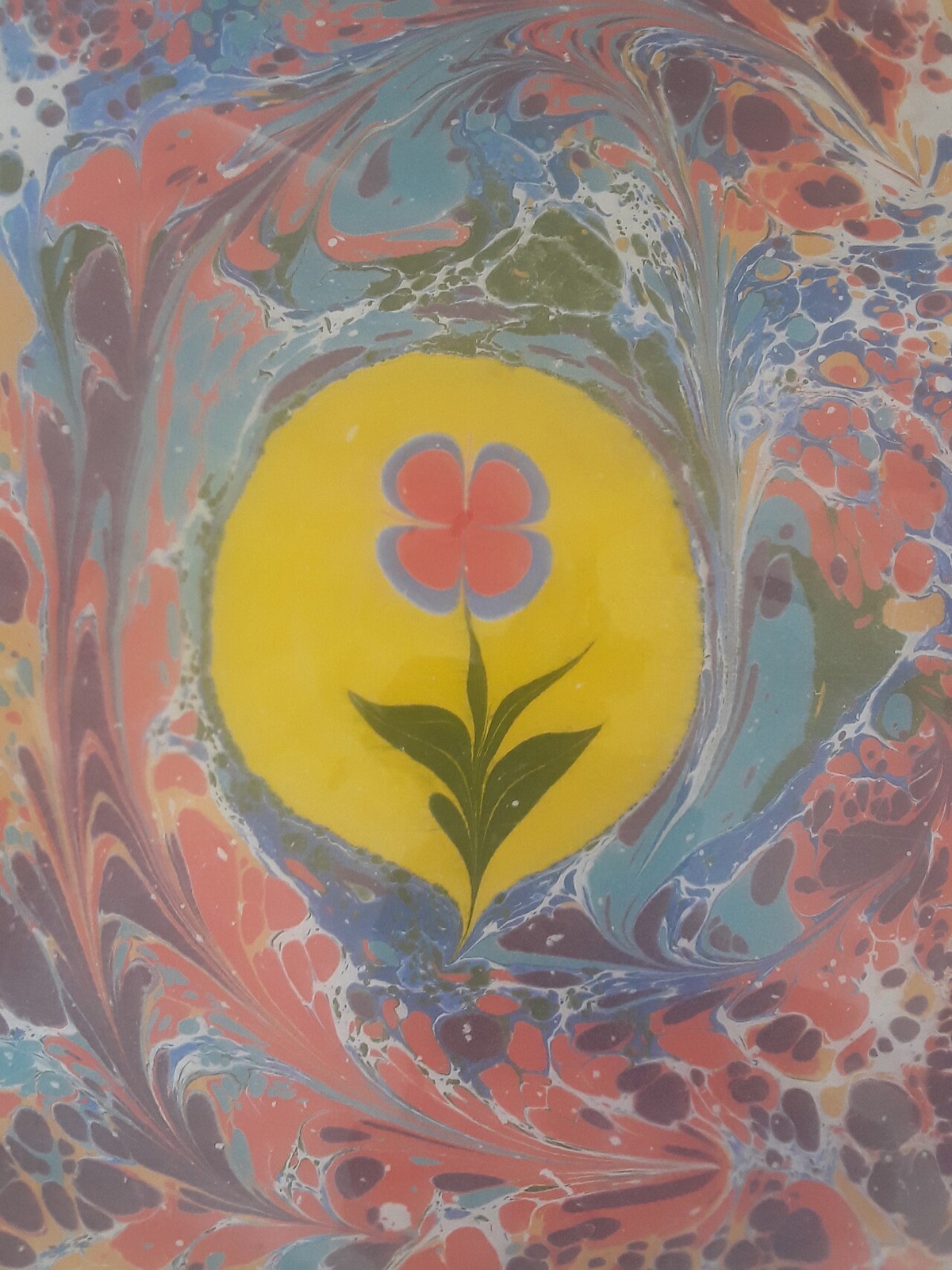
Görsel: Brcan (CC0), wikimedia commons
önce İngilizcesini oku
Imagine painting a picture not on paper, but on the surface of water.
This is exactly what artists do in ebru, the traditional Turkish art of marbling.
The name probably comes from a Persian word that means "like a cloud," because the patterns often look like clouds moving across the sky.
First, the artist prepares a shallow tray of water and makes it slightly thick by adding a natural substance from a plant.
This allows the paint to float on the surface instead of sinking.
The colors are made from natural pigments, and a few drops of ox gall are mixed into them so that they spread out on the water.
Using brushes made of horsehair, the artist drops the colors onto the water one by one.
Then the real magic begins.
With a thin needle or a comb, the artist gently moves the colors and draws patterns, such as waves, flowers or tulips.
When the picture is ready, a sheet of paper is carefully laid on the water for a few seconds.
The paper takes up all the colors, and when it is lifted, the picture is on the paper and the water is almost clean again.
Because the paint moves freely on water, no two pieces of ebru are ever exactly the same.
In the past, ebru papers were used to decorate the covers and inside pages of books.
In the early twentieth century, an artist named Necmeddin Okyay became famous for his flower designs, and his style is still taught today.
In 2014, UNESCO added ebru to its list of the intangible cultural heritage of humanity.
Today, many cultural centers in Turkey offer ebru classes, and even beginners can make a beautiful picture in their first lesson.
Arkadaşınla paylaş
Bu yazıdaki gramer
Metinde gördüğün yapıları ücretsiz derslerle öğren.
Ücretsiz test
İngilizce seviyeni 5 dakikada öğren
Ücretsiz gramer testi: hangi derslerden başlaman gerektiğini söyler.
Testi çöz