B2 · 4 dk okuma · 511 kelime ·
The Secret of Roman Concrete
Roma Betonunun Sırrı
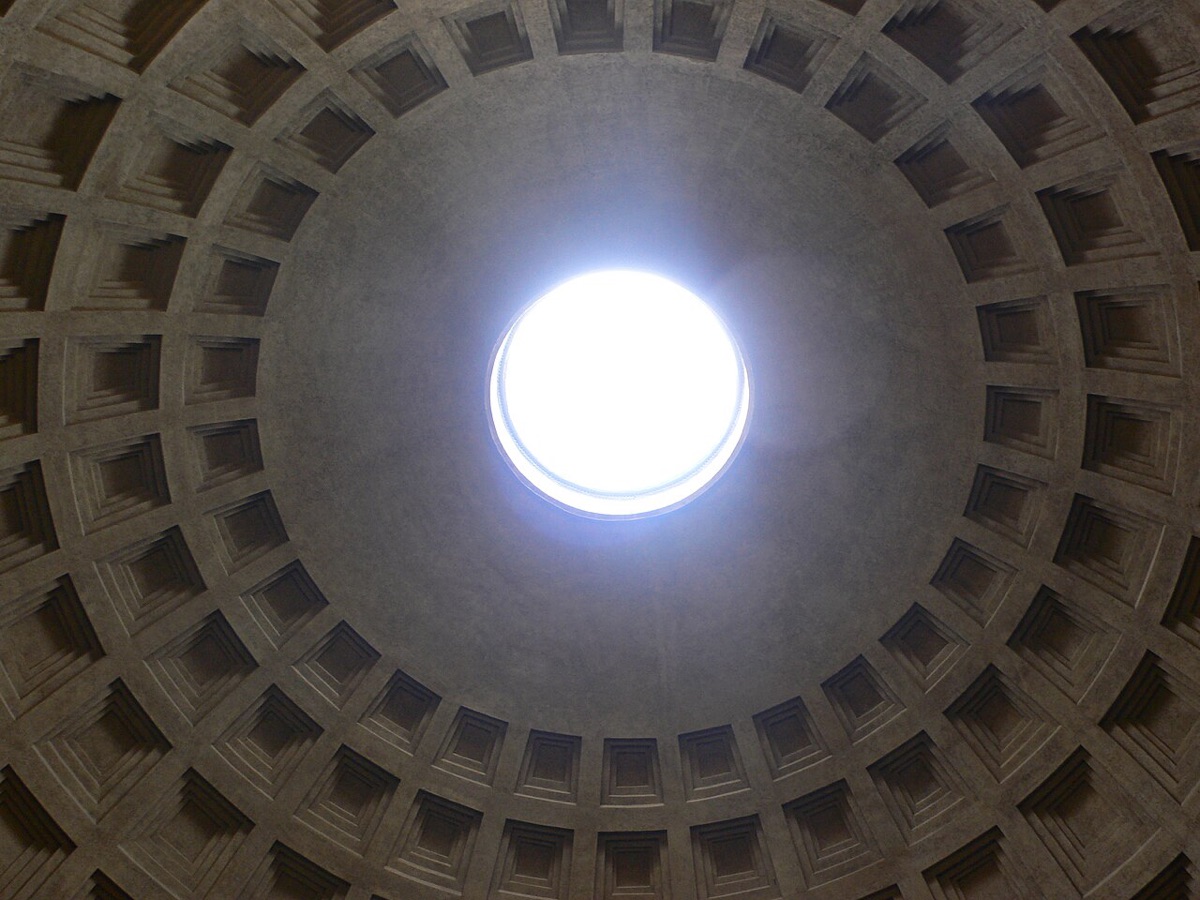
Görsel: Joachim Pense (Public Domain), wikimedia commons
önce İngilizcesini oku
In the center of Rome stands the Pantheon, a huge round building that was completed almost 1,900 years ago.
Its dome, which is 43 meters wide, is still the largest dome in the world made of concrete with no steel inside.
The builders made the dome lighter toward the top by mixing in light volcanic stone, and at its center they left a round opening about eight meters wide that still lets in sunlight and rain.
Modern concrete, by contrast, often begins to crack and crumble after 50 to 100 years.
So what did the Romans know that we seem to have forgotten?
Roman builders mixed lime, water and pieces of rock with a special ingredient, volcanic ash.
The best ash came from the area around the town of Pozzuoli, near Naples, and it was so highly valued that it was shipped all over the empire.
When the ash reacted with lime and water, it formed strong minerals that held the material together, and the concrete became harder over time instead of weaker.
The most surprising examples are found under the sea.
The Romans built harbors and walls in seawater, and many of these structures are still standing today, even though waves have hit them for two thousand years.
The Roman writer Pliny the Elder was amazed by this and wrote that, once it was under the sea, the concrete became a single mass of stone that no wave could break and that grew stronger every day.
In 2017, scientists who studied samples of this concrete discovered that seawater, which damages modern concrete, had actually made the Roman material stronger.
As seawater slowly moved through tiny cracks, it reacted with the volcanic ash and created rare crystals that filled the gaps and made the walls even tougher.
Another piece of the puzzle was solved in 2023.
For a long time, researchers had noticed small white lumps of lime inside Roman concrete and had assumed that they were the result of careless mixing.
A team at the Massachusetts Institute of Technology showed that these lumps were probably no accident at all.
The Romans seem to have mixed their concrete with very hot lime, and the lumps worked like a store of repair material.
When a crack appeared and water got in, the lime dissolved and then hardened again, so the crack closed by itself.
Engineers today are trying to learn from these ancient recipes.
This is not easy, because the Romans left very few detailed instructions, so the best guide to their methods is the concrete itself.
Some research teams are already testing new mixtures that contain volcanic ash or materials that can close their own cracks, inspired partly by the Roman method.
Making cement produces a significant share of the world's carbon dioxide, so a concrete that lasts for centuries instead of decades could save both money and energy.
Roman concrete is not perfect, and it is weaker than modern concrete when it is first made, but its long life is a lesson in patience.
Sometimes the best ideas for the future are hidden in the past.
Arkadaşınla paylaş
Bu yazıdaki gramer
Metinde gördüğün yapıları ücretsiz derslerle öğren.
Ücretsiz test
İngilizce seviyeni 5 dakikada öğren
Ücretsiz gramer testi: hangi derslerden başlaman gerektiğini söyler.
Testi çöz