B2 · 4 dk okuma · 567 kelime ·
How the Panama Canal Was Built
Panama Kanalı Nasıl Yapıldı?
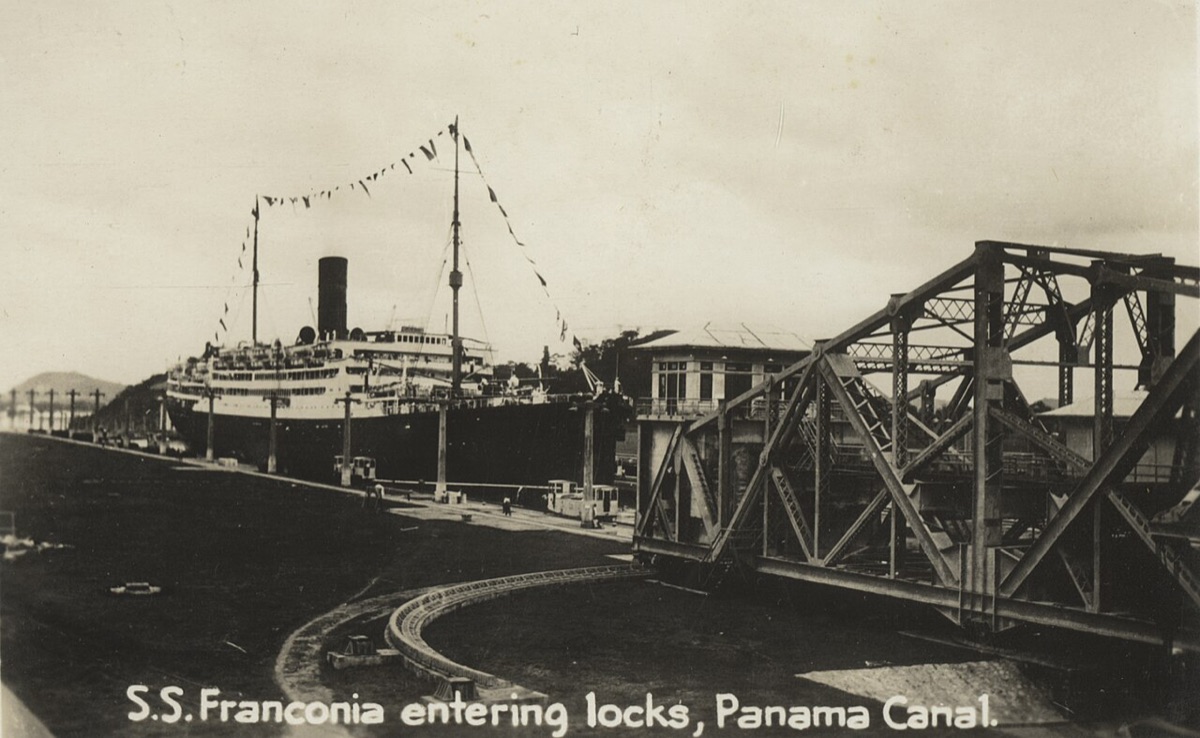
Görsel: Unknown author (Public Domain), wikimedia commons
önce İngilizcesini oku
For centuries, ships that wanted to travel between the Atlantic and the Pacific Oceans had to sail all the way around the southern tip of South America.
The journey was long and often dangerous, because the seas there are famous for their storms.
Sailing around the continent could add weeks to a voyage.
Yet in Panama, the land between the two oceans is so narrow that a canal across it would be only about 80 kilometers long.
People dreamed of cutting a canal through it for hundreds of years, but building one turned out to be one of the hardest engineering projects in history.
The first serious attempt was made by France in 1881.
It was led by Ferdinand de Lesseps, the man who had already built the Suez Canal in Egypt.
He planned to dig a canal at sea level, as he had done in Egypt, but Panama was very different from the flat, dry desert.
The workers had to cut through mountains and thick rainforest, and heavy rains caused landslides that buried months of work.
Worst of all, diseases spread by mosquitoes, such as yellow fever and malaria, killed thousands of workers.
The French company ran out of money in 1889, and the work stopped.
After years of struggle and enormous costs, the French project failed.
In 1904, the United States took over the work, and the engineers learned from the French mistakes.
First, doctors attacked the mosquitoes, draining standing water and cleaning up the towns, and the diseases slowly disappeared.
Second, instead of a canal at sea level, they decided to build a system of locks that would lift ships over the land.
They also built a huge dam on a river and created Gatun Lake, which was the largest artificial lake in the world at the time.
Ships could cross most of the country on this lake.
Meanwhile, huge steam shovels and trains moved millions of tons of earth and rock, as workers cut a deep valley through the mountains in the middle of the country.
At the busiest time, more than 40,000 people from many different countries were working on the canal.
A lock works like a giant water elevator.
A ship enters a large chamber, the gates close behind it, and water flows in until the ship has risen to the next level.
In Panama, three sets of locks lift ships about 26 meters up to the lake and later lower them down to the other ocean.
Interestingly, the locks do not need pumps, because the water flows down from the lake by gravity.
Small electric locomotives called mules run on rails beside the locks and pull the ships to keep them in the center.
The Panama Canal finally opened in August 1914, after ten years of American work.
A voyage from New York to San Francisco became about 12,000 kilometers shorter, and crossing the canal now takes a ship only eight to ten hours.
In 1999, control of the canal passed to Panama, and in 2016 a new set of larger locks opened for today's giant ships.
Each year, more than ten thousand ships pass through it, carrying goods from every corner of the world.
This makes it one of the busiest shipping routes in the world.
There is even a famous story about an American adventurer who swam the whole canal in 1928 and, like any ship, had to pay a toll based on his weight, which was just 36 cents.
Arkadaşınla paylaş
Bu yazıdaki gramer
Metinde gördüğün yapıları ücretsiz derslerle öğren.
Ücretsiz test
İngilizce seviyeni 5 dakikada öğren
Ücretsiz gramer testi: hangi derslerden başlaman gerektiğini söyler.
Testi çöz