B2 · 4 dk okuma · 535 kelime ·
Why Did the Dinosaurs Disappear?
Dinozorlar Neden Yok Oldu?
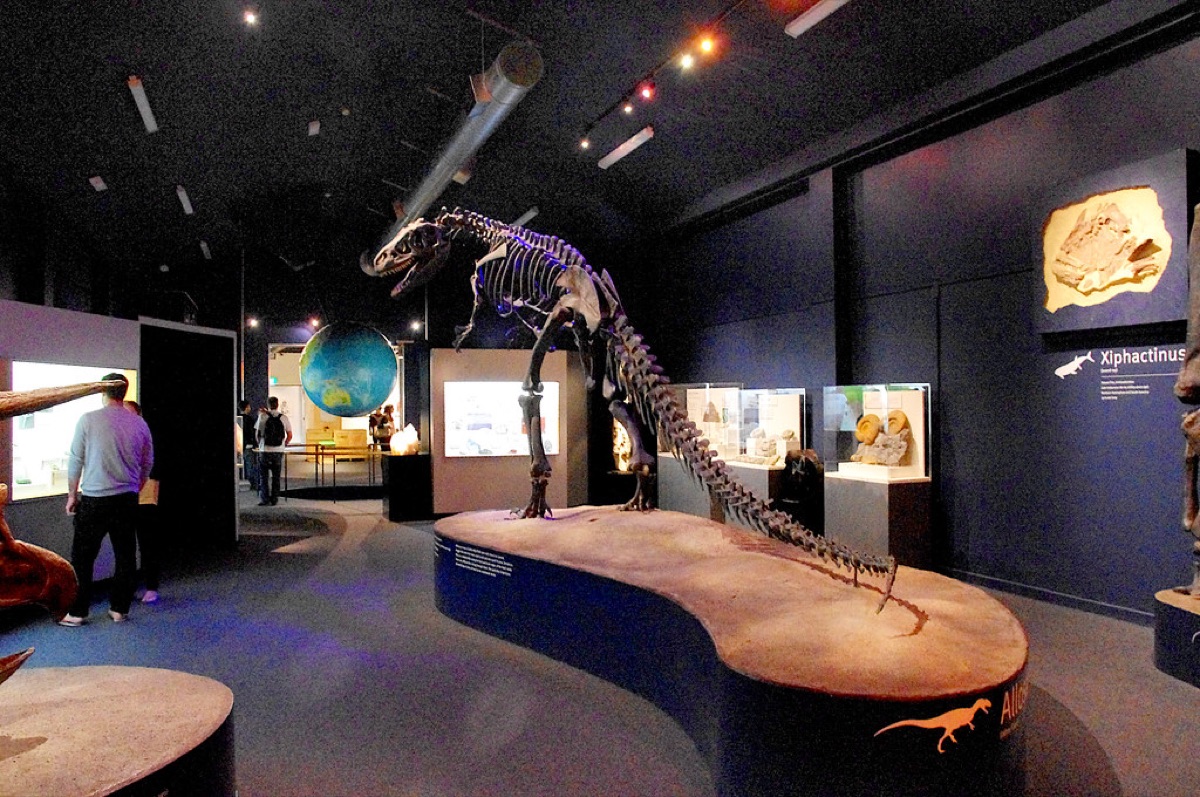
Görsel: Juhele_CZ (CC0), flickr
önce İngilizcesini oku
For about 165 million years, dinosaurs were the most successful animals on land.
Their name, which means "terrible lizard," was invented in 1842 by the British scientist Richard Owen.
Some were as small as chickens, while others were longer than three buses and heavier than ten elephants.
Then, about 66 million years ago, they suddenly disappeared, together with about three quarters of all the plant and animal species on Earth.
For a long time, nobody could explain what had happened.
The first important clue was published in 1980.
A team of American scientists, led by a father and son named Luis and Walter Alvarez, was studying a thin layer of clay in the rocks of Italy.
This layer, which formed exactly when the dinosaurs disappeared, contained huge amounts of iridium, a metal that is very rare on the Earth's surface but common in asteroids.
The same layer was soon found in many other places around the world.
The scientists suggested a bold idea: a giant asteroid must have hit the Earth.
At first, many experts did not believe them, because there was no crater large enough to prove it.
Since iridium also exists deep inside the Earth, some of them thought that it had come from volcanoes instead.
Then, in the early 1990s, researchers confirmed that a huge crater lay hidden under the Yucatan Peninsula in Mexico, partly beneath the sea.
The crater is about 180 kilometers wide, and it was made by an asteroid that was probably about ten kilometers across.
Its age matched the age of the clay layer almost perfectly.
In rocks of the same age, scientists also found tiny beads of glass made from melted rock, and grains of quartz with marks that only an enormous impact can create.
The impact must have been terrifying.
It released an enormous amount of energy, caused giant waves and started fires across large parts of the planet.
Scientists have even found soot from these fires in the same clay layer.
Even worse, dust and smoke rose high into the sky and blocked the sunlight for months or even years.
As a result, temperatures around the world dropped sharply.
Without sunlight, many plants died, and the animals that ate plants soon ran out of food, followed by the animals that ate them.
Some scientists think that huge volcanic eruptions in India, which were happening at the same time, made the situation even worse.
However, not everything died.
Small animals that could hide underground, live in water or eat many kinds of food had a better chance of surviving.
Among them were the ancestors of today's mammals, which were mostly no bigger than rats at that time.
Crocodiles and turtles also survived, perhaps because they can go for a long time without eating.
With the dinosaurs gone, mammals slowly spread and became larger, and millions of years later, humans appeared.
In a way, we owe our existence to that asteroid.
Interestingly, dinosaurs did not disappear completely.
Scientists now agree that birds are the descendants of small, feathered dinosaurs, which means that the sparrows in your garden are distant relatives of the mighty Tyrannosaurus rex.
Researchers have found many dinosaur fossils with feathers, especially in China, which show this connection very clearly.
Arkadaşınla paylaş
Bu yazıdaki gramer
Metinde gördüğün yapıları ücretsiz derslerle öğren.
Ücretsiz test
İngilizce seviyeni 5 dakikada öğren
Ücretsiz gramer testi: hangi derslerden başlaman gerektiğini söyler.
Testi çöz