B2 · 5 dk okuma · 602 kelime ·
Ibn Battuta, the Traveler Who Saw the World
Dünyayı Dolaşan Gezgin İbn Battuta
Görsel: José Martín (CC0), stocksnap
önce İngilizcesini oku
In 1325, a young man of twenty one left his home in Tangier, a city in Morocco, and set off toward the east.
He came from a family of judges and scholars, and he had received a good education.
He expected to be away for a year or two, but he did not return home for almost a quarter of a century.
His name was Ibn Battuta, and by the end of his life he had traveled further than almost anyone before him.
Historians estimate that his journeys covered about 120,000 kilometers, which is three times the distance around the Earth.
He traveled on foot, on camels and horses, and on ships of every size, at a time when every long journey was slow and dangerous.
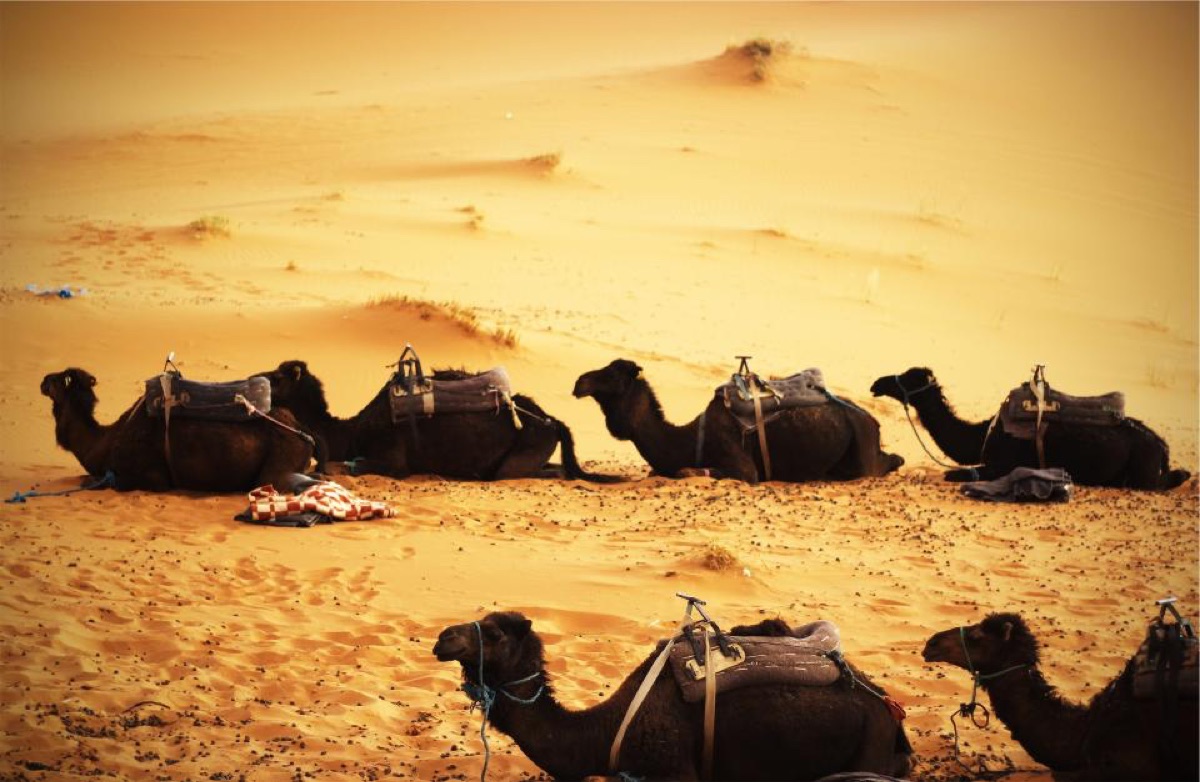
To cross deserts and dangerous regions, he often joined caravans, long lines of camels and people who traveled together for safety.
He crossed North Africa and Egypt, visited the cities of the Middle East and sailed down the east coast of Africa.
Later he went through Central Asia to India, and from there he continued to the Maldives, Southeast Asia and China.
Ibn Battuta had studied law, and this was very useful during his travels.
Rulers who met him often gave him gifts, money and even jobs.
In India, he worked for several years as a judge in Delhi, and later he became a judge in the Maldives.
In the Maldives, he described the beautiful blue lagoons and the coconut palms that grew everywhere.
Along the way, he married, made friends, lost almost all his belongings more than once, and survived storms, illnesses and shipwrecks.
Turkish readers may be especially interested in his description of Anatolia, which he visited in the early 1330s.
He traveled through towns such as Antalya, Konya, Bursa and Iznik, and he was deeply impressed by the hospitality of the local people.
In almost every town, he was welcomed by members of the Akhi brotherhoods, groups of craftsmen who had a tradition of offering food and shelter to travelers.
In one town, two groups of Akhis even argued about which of them would have the honor of hosting him.
He wrote that nowhere in the world had he seen people as kind to strangers as they were.
In Bursa, he met Orhan, the ruler of the young Ottoman state, and described the city as large and beautiful, with fine markets and wide streets.
Even after he returned to Morocco, Ibn Battuta did not stay at home for long, and in the early 1350s he crossed the Sahara Desert to visit the kingdom of Mali in West Africa.
When he came back from this last journey, the ruler of Morocco asked him to tell the story of his travels.
He did not write the book himself; instead, he described his adventures to a young writer, who put them on paper.
The result, usually called the Rihla, which means "the journey," was finished in 1355.
Historians think that some parts may be exaggerated or borrowed from other writers, but the book is still one of the richest descriptions of the fourteenth century world.
The book is full of details about food, clothes, markets and daily life, which makes it especially valuable for historians.
Ibn Battuta's book was almost forgotten for centuries, until European scholars rediscovered it in the nineteenth century and translated it into many languages.
Today, it is still read by people who dream of seeing the world, and a crater on the Moon has even been named after him.
His life is a reminder that curiosity, courage and kindness can take a person very far.
Arkadaşınla paylaş
Bu yazıdaki gramer
Metinde gördüğün yapıları ücretsiz derslerle öğren.
Ücretsiz test
İngilizce seviyeni 5 dakikada öğren
Ücretsiz gramer testi: hangi derslerden başlaman gerektiğini söyler.
Testi çöz