B1 · 3 dk okuma · 295 kelime ·
Why Do Cats Have Whiskers?
Kedilerin Bıyıkları Ne İşe Yarar?
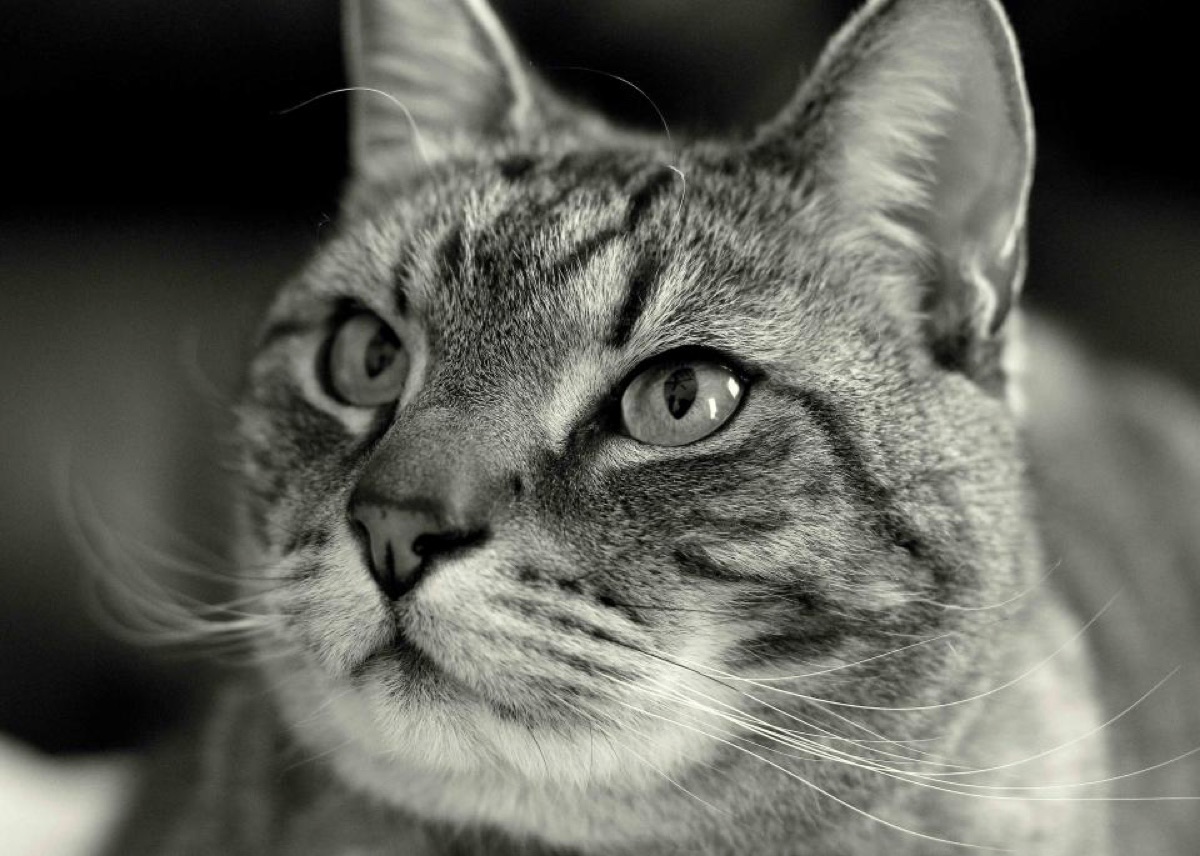
Görsel: Lynn Warren (CC0), stocksnap
önce İngilizcesini oku
A cat's whiskers are not just decoration.
They are special, thick hairs that grow much deeper in the skin than normal fur, and they are connected to many nerves.
Because of this, whiskers work like very sensitive antennas that tell the cat about the world around it.
Their scientific name is vibrissae, and many other animals, such as dogs, mice and seals, have them too.
Kittens are born with whiskers, long before they can see or walk well.
Most cats have about 24 whiskers on their face, 12 on each side of the nose, arranged in four neat rows.
They also have shorter ones above their eyes, on their chin and even on the back of their front legs.
The whiskers on the face are usually about as wide as the cat's body.
This helps the cat decide whether it can fit through a narrow gap before it tries to squeeze in.
Whiskers can also feel tiny movements in the air.
When a cat walks in the dark, the air moves around objects in different ways, and the whiskers notice these changes.
This helps cats move around furniture at night without bumping into anything.
Seals, for example, use their whiskers to feel the movements of fish in dark water.
When hunting, a cat pushes its whiskers forward, because it cannot see things that are very close to its nose well.
You can even read a cat's mood from its whiskers.
Relaxed whiskers point to the side, curious ones point forward, and whiskers that are pulled back flat against the face usually mean that the cat is afraid or angry.
Cats lose a whisker now and then, and a new one grows back, but you should never cut them, because a cat without whiskers can easily get confused.
Arkadaşınla paylaş
Bu yazıdaki gramer
Metinde gördüğün yapıları ücretsiz derslerle öğren.
Ücretsiz test
İngilizce seviyeni 5 dakikada öğren
Ücretsiz gramer testi: hangi derslerden başlaman gerektiğini söyler.
Testi çöz