B2 · 4 dk okuma · 566 kelime ·
Al-Jazari, the Engineer Who Built Robots 800 Years Ago
800 Yıl Önce Robot Yapan Mühendis: El-Cezerî
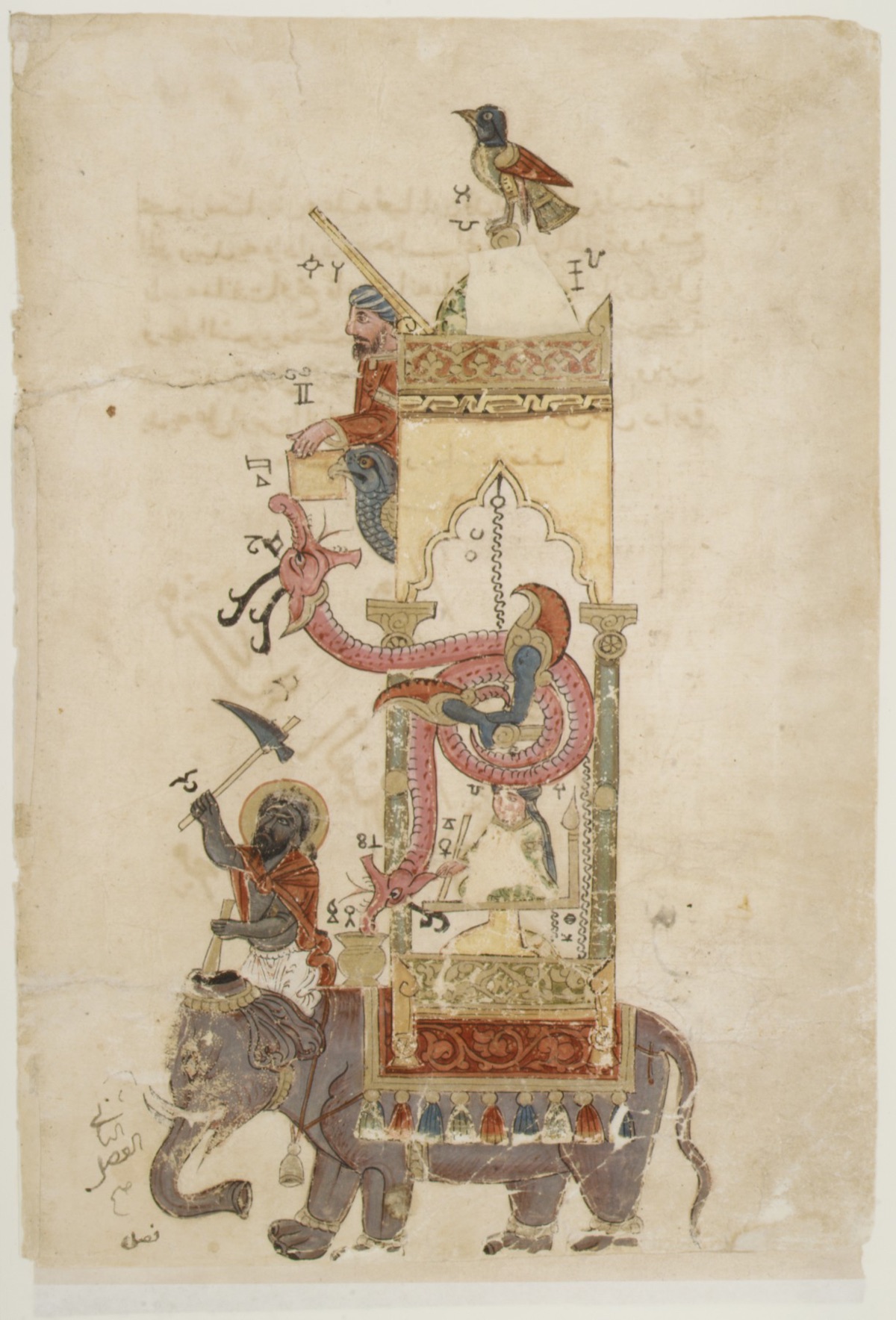
Görsel: al-Jazari (CC0), wikimedia commons
önce İngilizcesini oku
When we think of robots, we usually imagine modern machines full of wires and computer chips.
Yet more than 800 years ago, an engineer in southeastern Anatolia was already building machines that moved by themselves, played music and served water to guests.
His name was Ismail al-Jazari, and many people today call him one of the fathers of robotics.
Al-Jazari was born in 1136 in the town of Cizre, on the Tigris River, which is how he got his name.
For about twenty five years, he worked as the chief engineer for the Artuqid rulers in Diyarbakir.
Near the end of his life, in 1206, he finished a book in which he described about fifty of his machines in great detail.
What makes the book special is that it does not only describe the machines, but also explains step by step how to build them, with colorful drawings.
He wanted other craftsmen to be able to copy his work, which was unusual at a time when most inventors kept their secrets to themselves.
He did not claim to have invented everything himself, and he openly said that he built on the work of earlier Greek, Persian and Arab engineers.
His most famous invention is the elephant clock.
Inside a large elephant, a bowl with a small hole slowly sinks in a tank of water, and every half hour this movement sets off a chain of events.
A ball drops, a bird whistles, a figure on top of the elephant strikes a drum, and a pointer shows how much time has passed.
The design also brings together symbols from many cultures, including an Indian elephant, Chinese dragons and a Persian carpet.
To keep the clock running, someone only had to reset the bowl and collect the balls at the end of each cycle.
Al-Jazari also designed a boat with four mechanical musicians that floated on a lake and played for guests at royal parties.
Its drummer was controlled by small pegs on a turning wheel, and by moving the pegs, the rhythm could be changed.
For this reason, some historians describe it as one of the earliest programmable machines in history.
Another machine was a figure of a servant that offered water to wash with and then a towel, without any person touching it.
In a similar device, a mechanical peacock and small figures appeared one after another to give the guest everything needed for washing.
Not all of his inventions were for fun.
He built powerful pumps that lifted water for farms and cities, and some of them used an early form of the crank, a part that turns circular movement into back and forth movement.
The same idea is still used today in car engines and many other machines.
He also made locks that opened only with the right combination of letters, very similar to the combination locks we use on bags and bicycles today.
Copies of his book can be found in libraries around the world, including the library of Topkapi Palace in Istanbul.
Engineers have built working models of his machines, which show how cleverly they were designed.
In Istanbul, a museum of the history of science displays models of some of his inventions, including the elephant clock.
Eight centuries later, al-Jazari reminds us that the dream of building machines that think and move for us is much older than the computer.
Arkadaşınla paylaş
Bu yazıdaki gramer
Metinde gördüğün yapıları ücretsiz derslerle öğren.
Ücretsiz test
İngilizce seviyeni 5 dakikada öğren
Ücretsiz gramer testi: hangi derslerden başlaman gerektiğini söyler.
Testi çöz