B2 · 4 dk okuma · 553 kelime ·
Zeugma, a City of Mosaics
Mozaikler Şehri Zeugma
Görsel: Dosseman (Public Domain), wikimedia commons
önce İngilizcesini oku
On the banks of the Euphrates River, near the city of Gaziantep in southeastern Turkey, lie the remains of an ancient city called Zeugma.
Two thousand years ago, it was a rich and busy place, full of elegant houses whose floors were covered with beautiful mosaics.
Today, many of those mosaics can be seen in one of the largest mosaic museums in the world.
Parts of the ancient city are now an open air museum, where visitors can walk along old streets and see the foundations of houses.
The city was founded around the year 300 before our era by one of the generals of Alexander the Great.
Its later name, Zeugma, means "bridge" or "crossing" in ancient Greek, because it stood at an important crossing point on the river.
In fact, two cities stood opposite each other on the two banks, connected by a bridge of boats.
Traders, soldiers and travelers passed through Zeugma on their way between the Mediterranean and the lands further east.
Under Roman rule, the city grew to perhaps tens of thousands of people, and its wealthy families decorated their homes with mosaics and wall paintings.
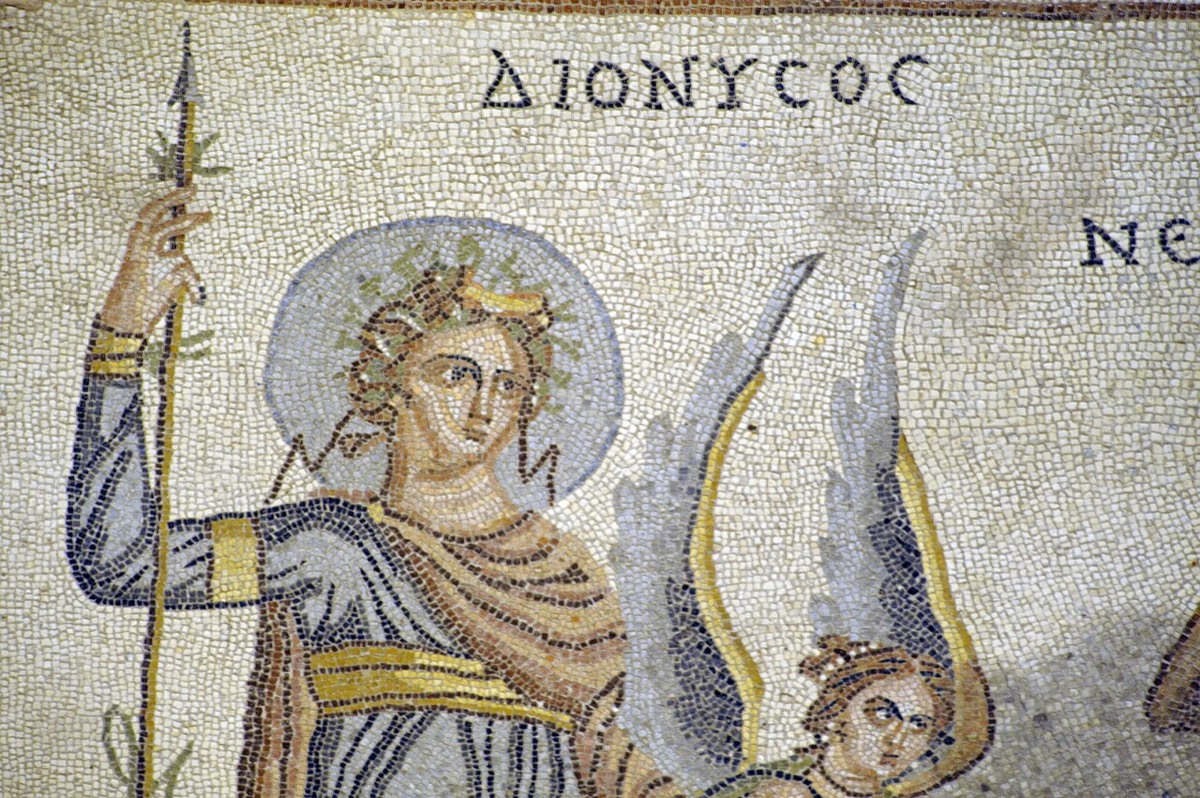
A mosaic is a picture made from thousands of tiny pieces of colored stone or glass.
The artists of Zeugma were extremely skilled, and they used the pieces almost like paint, creating shadows, faces and movement.
Many of the mosaics show scenes from ancient myths, such as gods and heroes, sea creatures and famous love stories.
Some of them also contain names written in Greek letters, and making one large mosaic could take a team of craftsmen many months.
Some houses had mosaics on every floor, as if the families wanted to walk on works of art.
For centuries after the city was abandoned, the mosaics lay hidden under the soil.
Then, in the late 1990s, a large dam was being built on the Euphrates, and archaeologists realized that its lake would soon cover part of the ancient city.
An international rescue project began, and teams worked day and night to dig up and save as many mosaics as possible before the water arrived.
Archaeologists from many countries took part, and people from nearby villages helped with the work.
Although some parts of the city are now underwater, the most important treasures were moved to safety.
In 2011, the Zeugma Mosaic Museum opened in Gaziantep to display them.
The building was designed especially for these treasures, and besides the mosaics it also displays statues, columns, coins and pieces of wall paintings.
Visitors can walk above whole floors of Roman houses and see the mosaics as they were originally arranged.
The most famous piece is a portrait of a young woman with large, dark eyes, which seem to follow visitors as they move around the room.
It has become a symbol of Gaziantep, and its face can be seen on posters and souvenirs all over the city.
Some pieces of this portrait had been missing for decades, and they were finally brought back and returned to the museum in 2018.
Excavations at Zeugma still continue today, and archaeologists regularly find new mosaics in the parts of the city that remained above the water.
If you visit Gaziantep, famous for its food, the museum is worth a visit, ideally before a plate of the city's famous baklava.
Arkadaşınla paylaş
Bu yazıdaki gramer
Metinde gördüğün yapıları ücretsiz derslerle öğren.
Ücretsiz test
İngilizce seviyeni 5 dakikada öğren
Ücretsiz gramer testi: hangi derslerden başlaman gerektiğini söyler.
Testi çöz